
Getting Your Side-by-Side Ready for Fall and Winter Work in the Fraser Valley

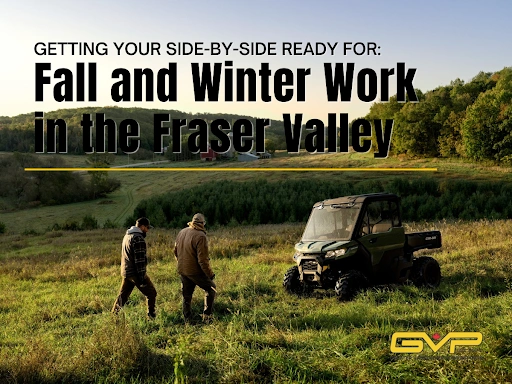
If you own acreage or work agricultural land in the Fraser Valley, your side-by-side does not get a winter break. October through February in this region means saturated ground, mud on every access road, the occasional snowfall, and days that start dark and stay cold. A machine that was not serviced after summer and not set up for these conditions will cost you time and money at the worst moment. Here is what to check, what to add, and how to keep your Defender working all season long.
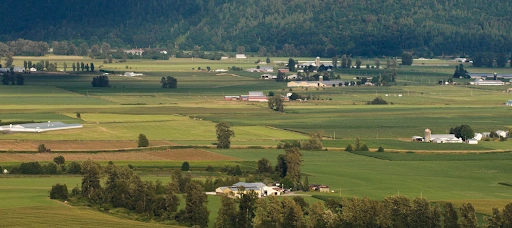
Fall in the Fraser Valley Is Hard on a Side-by-Side
What October to February actually looks like on a Fraser Valley property
The Fraser Valley does not get the deep freeze, but it makes up for it with persistent wet. From October onward, you are dealing with saturated clay soils, standing water on low-lying fields, frost on access roads in the morning, and the occasional heavy snowfall that needs clearing before the day starts. Temperatures regularly drop below zero overnight and hover just above freezing during the day - cold enough to stress a battery, stiffen a belt, and turn soft ground into axle-deep mud.
For acreage owners moving feed, equipment, and materials through this season, a side-by-side is often the most practical machine on the property. The question is whether it is ready for the conditions.
Why October is the right time to prep - not December
October is when the work starts. By December, GVPS service bays at both Langley and Chilliwack are booked out and parts that need to be ordered from BRP take time to arrive. Getting a service appointment and accessory installation in October means your machine is ready when the first hard frost hits, not three weeks after. A belt that needs replacing or a battery that will not hold a charge in the cold is a problem you want to find in a service bay, not in the field at 7 AM.
Fall Service Checklist: What to Check Before the Weather Changes
If your Defender worked hard through spring planting and summer, it has taken on wear that shows up in cold and wet conditions. Some of these you can spot yourself before you book, others are worth having the BRP-certified technicians at GVPS Langley or Chilliwack confirm before the season turns.
Belt and clutch — inspect after a hard summer of hauling
The CVT belt is the first thing to look at on any Can-Am side-by-side heading into a demanding season. A belt that ran fine in summer heat can show cracking, glazing, or fraying that becomes a failure point when it is cold and you are hauling a heavy load up a muddy grade. Cold weather stiffens the belt and increases stress on startup, a worn belt in October becomes a snapped belt in January. The GVPS service team will catch the early signs of wear that are easy to miss before they become a problem in the field.
Fluids for cold operation
Three fluids matter most heading into a Fraser Valley winter. You can check levels yourself, but condition is what matters, and that requires testing:
-
Coolant: Check the fluid level and test its freeze protection. Fraser Valley temperatures can drop to minus 10 or minus 15 °C during sudden freezing spells. Coolant that appears fine might be old or diluted, leaving your engine unprotected at those temperatures.
-
Differential and gearcase oil: Cold thickens gear oil and reduces lubrication on startup. If your machine has run through deep puddles or standing water, common on Fraser Valley agricultural land, moisture contamination is a real risk. The GVPS team inspects the oil condition and changes it if the season warrants.
-
Brake fluid: Moisture absorption lowers brake fluid's boiling point over time. Flush if it has not been done in two years, the GVPS team tests the fluid condition before recommending a flush.
Battery health — cold weather kills a weak battery fast
A battery that starts your Defender reliably in September may not turn the engine over at minus 5 on a January morning. Check that connections are clean and tight, that is the easy part. The GVPS service team runs an actual load test, not just a voltage check, to show how the battery performs under real starting demand. A battery at less than 75 percent capacity gets flagged for replacement before winter, not after it leaves you stranded.
Tires — mud season tires for Fraser Valley conditions
Take a look at your tread before October. Stock tires on most Defender models handle moderate terrain reasonably well, but in Fraser Valley clay mud, the saturated, sticky kind that coats everything from October through April, a dedicated mud tire with aggressive open-tread lugs clears itself and maintains traction where a stock tire spins. If you are regularly running across saturated fields or river bottom access roads, bring it up with the parts team at GVPS Langley or Chilliwack. They can confirm fitment for your specific model year and have new tires mounted at the same appointment as your service.
Winter Accessories Worth Adding Before November
Snow plow and blade kits for the Can-Am Defender
A plow blade turns your Defender into a property maintenance machine from the first snowfall. For the Defender HD11 platform (2026 models), the SuperATV Plow Pro Snow Plow is a well-regarded option - 72-inch blade, 10-gauge steel construction, seven adjustable blade angles, and a winch-operated lift system. The bolt-on quick-connect mount stays on the Defender year-round so the blade attaches and detaches in minutes. Note that a winch is required to operate most plow systems - if you do not already have one, plan to install both at the same time.
For older Defender models (2016 to 2022), 60-inch and 72-inch blade kits with mid-mount designs and full 180-degree blade adjustability are available through the GVPS parts department. These systems include a reversible wear bar, ski shoes, and a heavy-duty push tube frame. Ask the parts team to confirm fitment for your specific model year before ordering.
Cab enclosures and windshields - staying productive in Fraser Valley rain and cold
An enclosed cab makes a material difference in how long you can work through a Fraser Valley winter. The Defender XT CAB HD11 comes with a factory hard cab and heat from the factory - the premium option for buyers who want a turnkey year-round work machine. For existing open-cab Defenders, aftermarket soft cab enclosures or hard windshield kits keep wind, rain, and cold off the operator without the cost of a full factory cab model. A windshield alone extends the practical working temperature range significantly on a machine that would otherwise be miserable to operate in February rain.
Cargo bed covers and liners
A cargo bed liner protects the steel floor from rust and makes cleanup after muddy loads far faster. A bed cover keeps rain and debris out of the cargo area when the machine is parked outside overnight, relevant for acreage owners who do not have covered storage for their Defender. Soft covers fold away quickly when you need full bed access; hard folding covers offer more weather protection. LinQ-compatible accessories for the bed add organized storage for tools, tie-down hardware, and the items that end up loose in the cargo bed every time.
LED lighting - short days and early morning property work
Sunrise in the Fraser Valley in January is after 8 AM. If you are doing property work before then - moving animals, checking fences, dealing with flooding on low ground - a 20 to 30-inch LED light bar mounted to the front of the Defender changes what is possible. Rear pod lights are useful for loading the cargo bed after dark or reversing a trailer on an unlit property. Wiring harnesses for Can-Am Defenders are available from most major accessory brands and are a straightforward install at a GVPS service appointment.
Winch - mud season recovery on acreage and farm land
A winch is not just a hunting accessory. On Fraser Valley agricultural land in October through April, a machine without a winch has no self-recovery option when it settles axle-deep in saturated ground far from the barn. A 3,500 lb rated winch on the Defender covers the majority of solo-recovery scenarios on flat agricultural terrain. Step up to 4,500 lb if you are regularly running a loaded cargo bed or towing through soft ground. As noted above, a winch is also required to operate most plow blade systems.
Storing vs. Running Through Winter: Which Makes Sense for Your Operation
When to keep the machine working all winter
For most Fraser Valley acreage owners, the Defender runs year-round. The workload does not stop in November and the machine is often busiest in the wet months when moving anything by foot or light vehicle across soft ground becomes impractical. If this describes your operation, the focus is on keeping the machine in working condition through the season: regular belt inspections, battery maintenance, mud clearing from the undercarriage, and staying on top of fluid levels.
How to properly store a Can-Am Side-by-Side if you are putting it away
If your machine is seasonal and you are storing it from November through March, a few steps make a significant difference when you bring it back out:
-
Fuel stabilizer: Add fuel stabilizer to a full tank and run the engine for 10 minutes to circulate it through the system. Untreated fuel left in a machine over winter gums up the fuel system and causes hard starts in spring.
-
Battery: Either remove the battery and store it in a warm space, or connect a battery tender for the duration of storage. A battery left discharged in a cold garage for four months will not recover.
-
Clean the undercarriage: Fraser Valley clay mud holds moisture against metal surfaces and accelerates corrosion. Pressure wash the undercarriage before storage, dry it, and apply a light coat of corrosion inhibitor to exposed metal and electrical connectors.
-
Inflate tires to the upper end of the recommended range: Tires lose pressure in cold storage and can develop flat spots if left underinflated on a cold floor.
-
Cover the machine: A fitted cover or a quality tarp keeps rodents, dust, and moisture off the machine through winter storage.
Book Your Fall Service at GVPS Chilliwack or Langley
Greater Vancouver Powersports has BRP-certified technicians at both Langley and Chilliwack. The Chilliwack location is the most convenient for Fraser Valley acreage owners and covers the eastern valley through to Hope. Fall service appointments include a full machine inspection, fluid changes, belt and battery checks, and accessory installs. Plow mounts, winches, LED light bars, and cab enclosures can all be sourced and installed at the same appointment.
October books fast. Call GVPS Langley at 604-888-8700 or GVPS Chilliwack at 604-795-7800, or book your appointment today through gvps.ca!
Frequently Asked Questions
Can I add a snow plow to a Can-Am Defender?
Yes. Plow blade kits are available for most Defender models including the current HD11 platform. A typical setup uses a 60 to 72-inch steel blade with adjustable angle, a mid-mount frame that bolts to the Defender's front end, and a winch-operated lift system. Note that a winch is required to operate the plow, if your machine does not already have one, install both together. The GVPS parts team at Langley and Chilliwack can confirm fitment for your specific model year and arrange installation.
What tires work best for Fraser Valley mud and winter conditions?
For Fraser Valley clay mud from October through April, a dedicated mud tire with deep, open-lug tread is more effective than a stock all-terrain tire. Open lugs clear mud between the treads and maintain traction on saturated ground where a stock tire glazes over. For light snow and frost on access roads, a quality all-terrain tire with good siping handles most Fraser Valley winter conditions without requiring a dedicated snow tire. Ask the GVPS parts team about fitment options for your specific Defender model.
How do I winterize a Can-Am Side-by-Side if I am storing it for the season?
The key steps are: add fuel stabilizer to a full tank and run the engine, remove or tender the battery, clean the undercarriage of mud and debris, inflate tires to the upper recommended pressure, and cover the machine. These steps prevent the most common storage-related issues, gummed fuel systems, dead batteries, and corrosion from moisture trapped in clay mud. A full pre-storage service at GVPS adds a belt inspection, fluid check, and lubrication of key components before the machine goes away.
Is the Can-Am Defender good for year-round acreage work in the Fraser Valley?
Yes, and it is one of the most practical machines for this specific use case. The cargo bed, towing capacity, and drivetrain are built for the kind of work Fraser Valley properties demand - hauling feed and materials across soft ground, clearing snow from access roads with a plow attachment, moving equipment and crew across a working property. The Defender XT CAB HD11 with its factory enclosed cab and heat is the premium option for operators who need to work through the full wet season in comfort. Entry-level HD7 and HD9 models handle lighter but consistent daily work at a lower price point.
What fluids should I change on my Side-by-Side before winter?
Before a Fraser Valley winter, prioritize three fluids: coolant (check freeze protection level with a tester - should be rated to at least minus 30 Celsius for BC conditions), differential and gearcase oil (change if not done in two seasons or if you have done deep water crossings that may have introduced moisture), and brake fluid (flush every two years - absorbed moisture lowers boiling point and reduces braking performance under heavy use). Engine oil is standard annual maintenance and should be done at the same time if it is due.