
Prepping Your Sea-Doo for the 2026 Riding Season

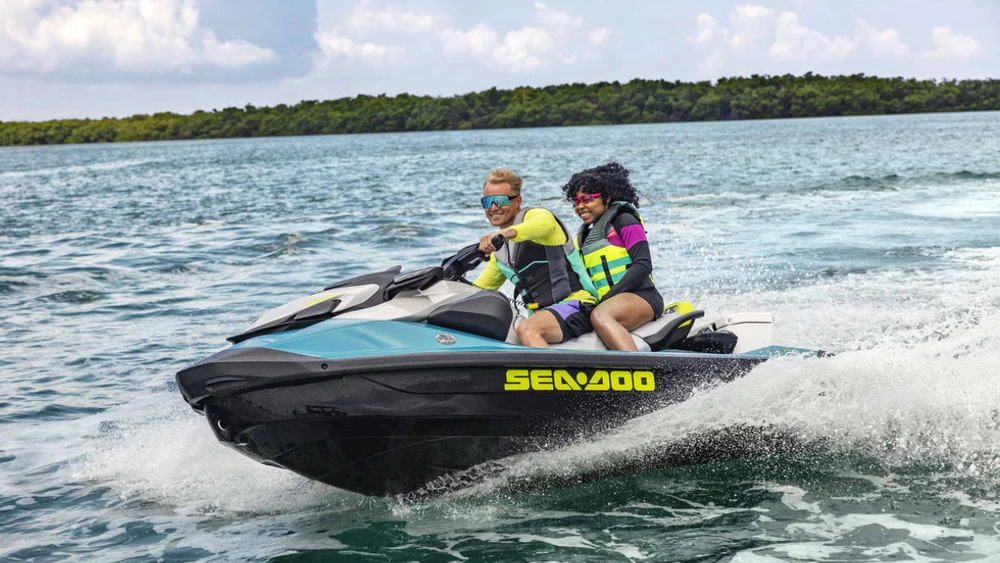
Get Your Sea-Doo Water-Ready: The Ultimate Pre-Season Guide
There’s nothing worse than showing up at Pitt Lake or Harrison Lake, ready for your first ride of the season, only to be met with a dead battery.
Getting your Sea-Doo back on the water isn’t just about turning the key. A proper de-winterization ensures your watercraft is safe, reliable, and performing at its best from day one.
As an experienced Sea-Doo dealership, Greater Vancouver Powersports also offers professional maintenance services to get your machine fully prepped and water-ready, so you can ride with total confidence.
Based on official BRP guidelines, here’s a complete step-by-step guide to get you off the trailer and onto the water with confidence.
Step 1: Sea-Doo Battery & Electrical Check
The battery is the heart of your machine. After months of storage, it requires a close look:
Reinstall & Clean: Ensure your battery is fully charged and clean the terminals of any white buildup or corrosion, which can prevent the engine from cranking.
Cable Inspection: Ensure connections are tight and the wiring shows no signs of wear or rodent damage.
GVP Tip: If your battery sat in a cold garage without a maintainer, it may show 12V but lack the "cranking amps" to start. We carry genuine BRP Yuasa batteries for reliable starts all summer.
Step 2: Sea-Doo Maintenance: Engine & Fluids
Before firing up the engine for the first time, verify its "vital signs":
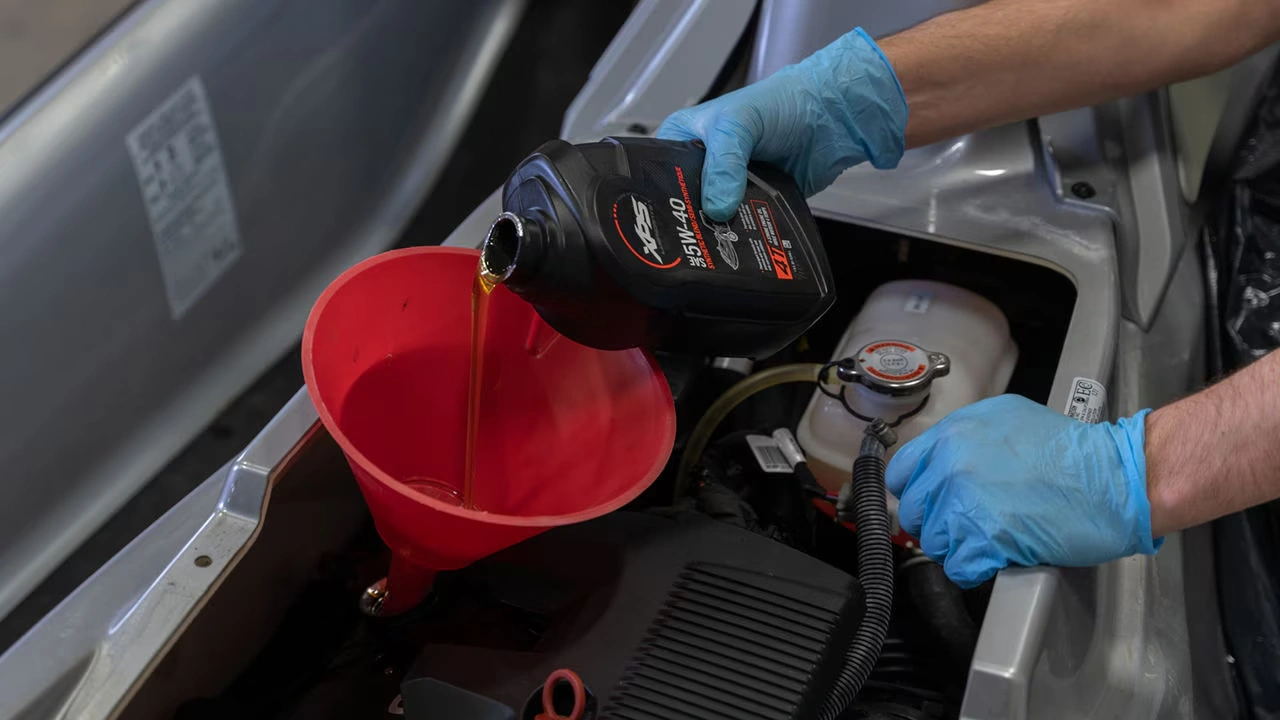
Oil & Filter: Check the level and colour. If the oil is dark or wasn't changed during winterization, install a fresh XPS Oil Change Kit now.
Closed-Loop Cooling (CLCS): Sea-Doo models use a unique closed-loop cooling system. Verify coolant levels in the reservoir and check for leaks that may have developed during deep-freeze temperatures.
Spark Plugs: Worn or carbon-coated plugs cause rough idling and "limp mode." Swapping them annually is the cheapest way to ensure a smooth-running engine.
Step 3: Jet Pump & Hull Integrity
Your propulsion system and the vessel's shell deserve just as much attention as the engine.
Hull & Drain Plugs: Inspect the fibreglass or Polytec for deep gouges or "spiderwebbing." Most importantly, check your drain plugs. Ensure the O-rings aren't cracked; a failing plug is the fastest way to sink a fun day.
The Intake & Impeller: Clear out debris or cobwebs from the intake grate. Inspect the impeller for nicks. Even small damage can cause cavitation, which feels like a slipping clutch and kills your top speed.
This is essential if you ride in saltwater like Indian Arm. If these metal blocks are more than 50% worn, replace them to prevent engine electrolysis.
Step 4: The Driveway Flush Test
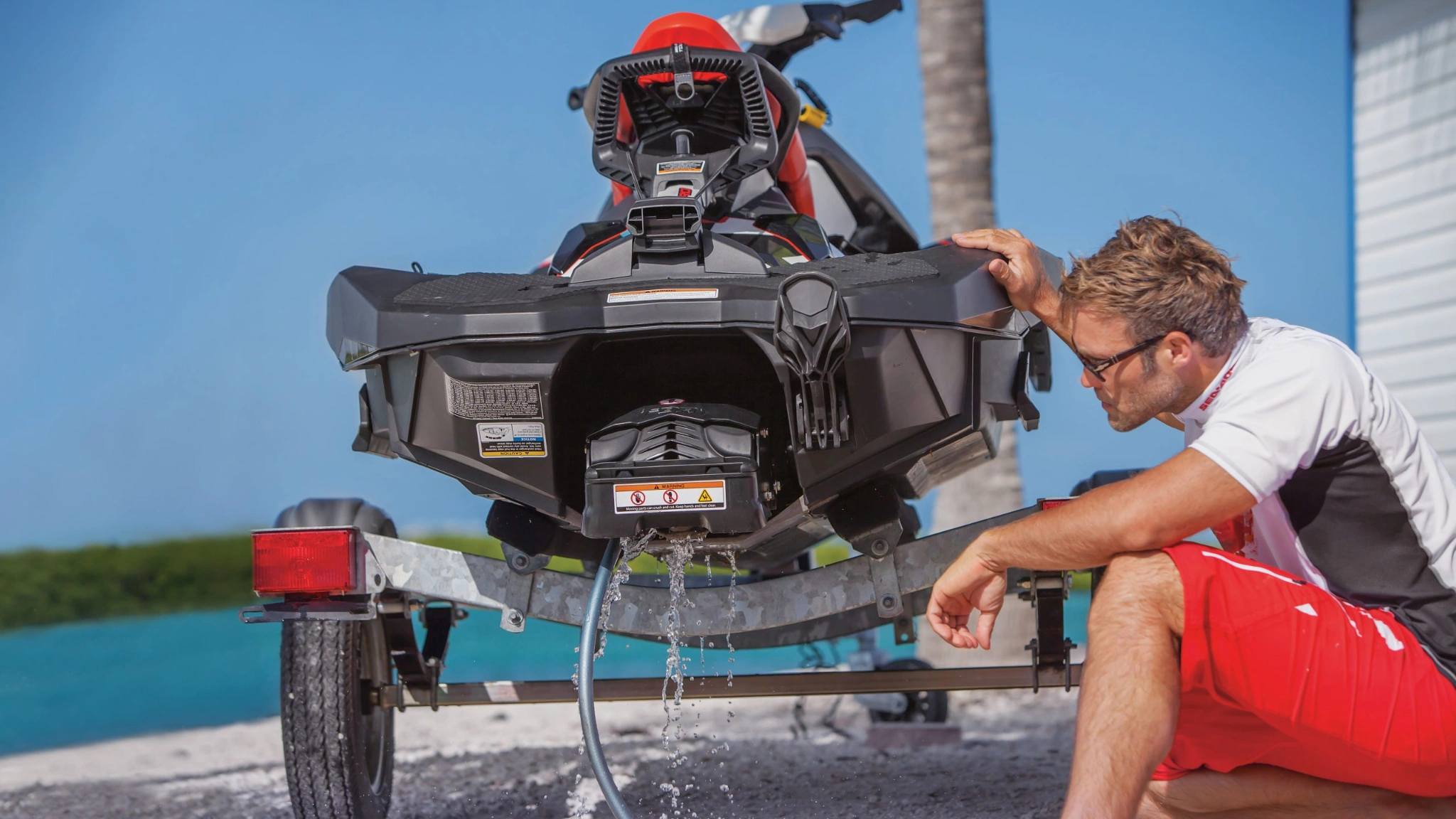
Never let the boat ramp be the first time you start your engine. Perform a controlled test at home using the flush port. Follow this sequence strictly to avoid flooding the engine:
Engine ON → Water ON → Water OFF → Engine OFF
This order is critical to avoid flooding the engine.
Let the Sea-Doo run briefly and listen for smooth operation. Watch the display for any warning messages or active fault codes. Catching issues now is far better than dealing with them at the launch.
Step 5: Safety Gear & Trailer Audit
Don’t let a trailer breakdown ruin the trip before you even reach the water.
Trailer: Check tire pressure and grease the wheel bearings. Boat launches are tough on dry bearings, and a seized axle is a common early-season disaster.
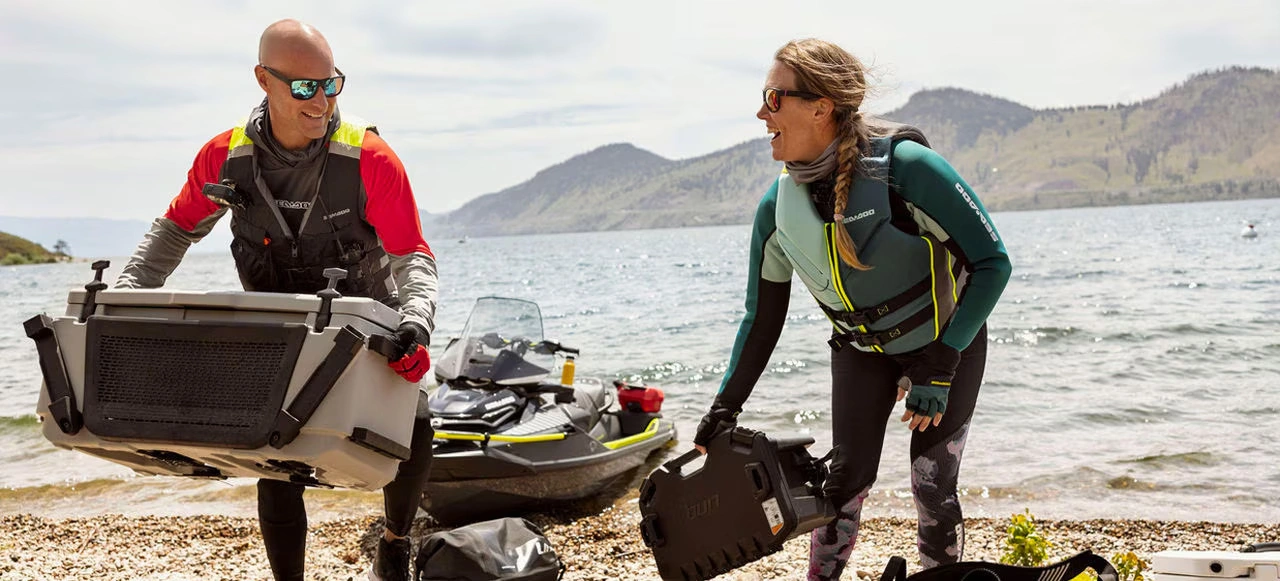
Safety Gear: Ensure life jackets are free of mold and tears. Verify your fire extinguisher is still in the "green" pressure zone and your signaling whistle is attached.
Let the Experts Handle It
Want total peace of mind before your first ride? Let the pros take care of it.
Our certified BRP technicians offer a complete pre-season inspection to ensure every detail is covered, so you can focus on enjoying the ride.
We do the wrenching. You do the riding.
Frequently Asked Questions
How often should I change my spark plugs?
While it varies by model, we generally recommend inspecting them every season. If they are fouled or have carbon buildup, replacing them is a small investment that prevents "limp mode" or rough idling while you're out on the water.
My battery was on a charger all winter. Do I still need to check it?
Yes. Even a maintained battery can develop terminal corrosion or lose its cranking power over time. Ensure the connections are tight and the terminals are clean. If the engine turns over slowly, it’s a sign the battery is nearing the end of its life.
What should I do if I see white buildup on my battery terminals?
This is corrosion. Clean it off using a wire brush and a mixture of baking soda and water. Once clean and reconnected, apply a bit of dielectric grease to prevent future buildup.
Why is the "Engine ON → Water ON" sequence so important when flushing?
Sea-Doo engines use the exhaust pressure to keep water out of the engine. If you turn the water on before the engine is running, water can backflow through the exhaust valves and into the cylinders, causing catastrophic engine damage.
Can I perform these checks myself, or should I book a service?
While many of these steps are DIY-friendly, a professional inspection at Greater Vancouver Powersports includes a diagnostic plug-in to check for hidden fault codes and a multi-point safety check performed by certified BRP technicians that goes beyond the basics.
How long does a professional pre-season inspection take?
Most inspections are completed within a day, depending on parts availability. We recommend booking at least two weeks before your first planned trip to Shuswap or Harrison to beat the "sunny day" rush!